Topic
Candle wicks, burn testing and fixing problems
A wick chart gives you a starting point, not an answer. The chart was built with one wax, one oil, one load and no dye, and your candle differs in at least one of those. The only way to know whether a wick suits your candle is to burn it all the way down and watch.
These guides cover that part of the work: setting up a fair wick test, what to write down at each check, how to compare a new test against an old one, and how to tell a real burn problem from a cosmetic one. Wet spots and frosting look worrying but don’t change the burn. Soot, tunneling and a hot jar do.
Start with how to run a wick test. When a candle misbehaves, the candle troubleshooter lists the usual causes in the order worth checking.
7 guides
 Candle tunneling: what causes it and how to fix it on the next pourNovember 16, 2026 · Tell normal early wax hang-up from real tunneling, read the flame and melt pool together, and plan a fair three-wick retest with worked wax and fragrance amounts.
 Wooden wicks vs cotton wicks: what changes when you size and test themOctober 31, 2026 · Wood wick or cotton wick? How the two differ in sizing, trimming, wax and fragrance, why a wooden wick won't stay lit, and a worked test plan for a 3 inch tumbler in soy wax, from supplier guides.
 Candle sinkholes, cracks and rough tops: myths, facts and the second pourOctober 27, 2026 · Why candle tops sink, crack and go lumpy, what suppliers recommend for each, when a heat gun is enough and when a second pour is the fix, with worked top-up wax amounts for a pillar and a batch of jars.
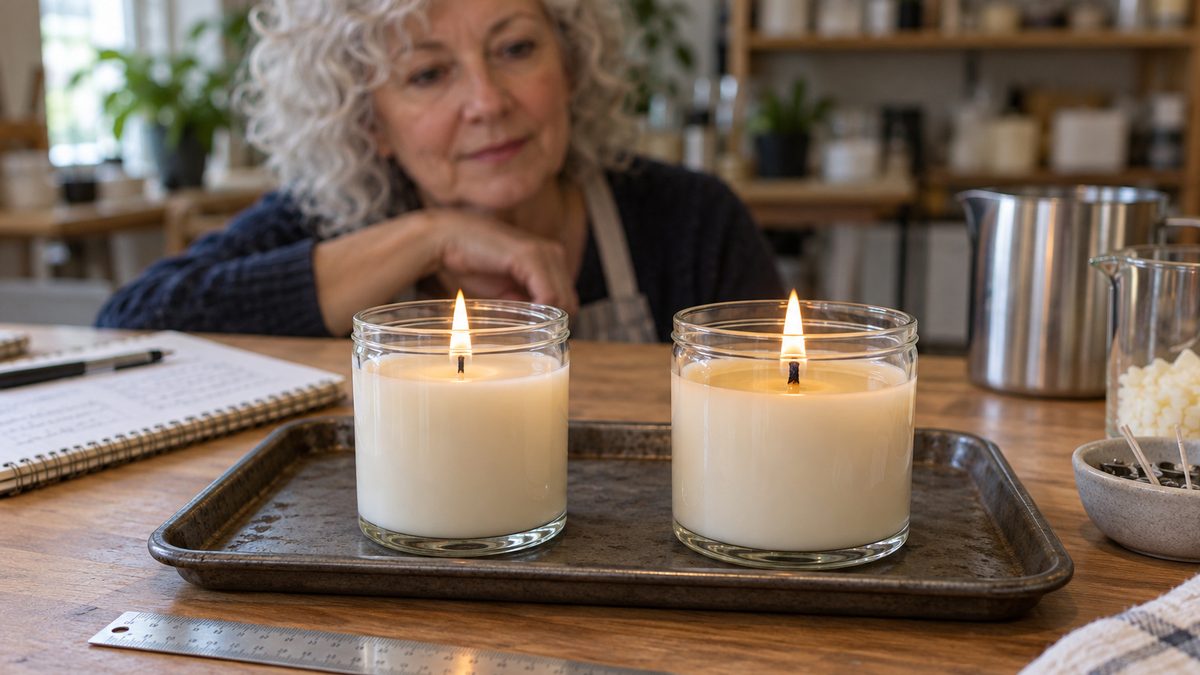 Comparing two wick tests: what to write down before you change the recipeOctober 24, 2026 · A checklist for making two wick tests comparable: what has to stay the same, what to record at every check, and how to tell a real difference from a different cure, room or burn length.
 How long to cure a candle: what each supplier actually saysOctober 24, 2026 · Cure times compared by wax type: what suppliers publish for soy, paraffin and blends, where they disagree, the difference between hardening and curing, and how to choose a cure time you can repeat.
 How to run a wick test that actually tells you somethingOctober 21, 2026 · A full wick test from start to finish: choosing three wick sizes, pouring fair test jars, burning in four-hour cycles down to the last quarter inch, and reading melt pool, flame, soot and mushrooming the way suppliers do.
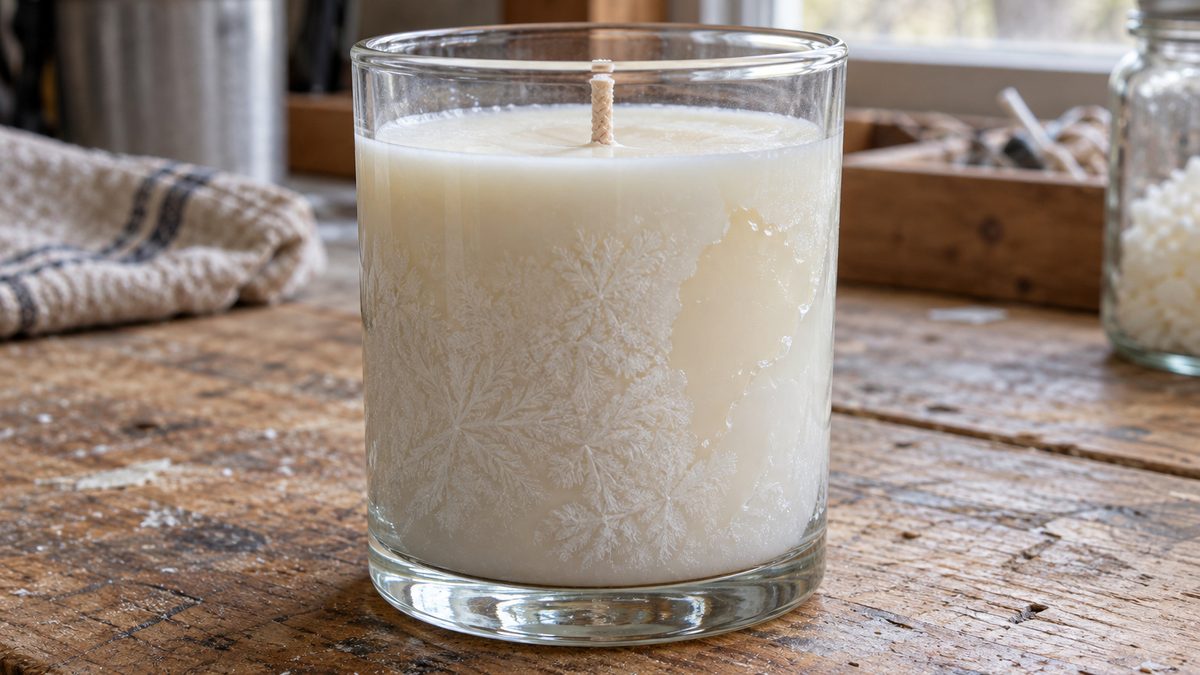 Wet spots and frosting: what they are and when to worryOctober 21, 2026 · Why soy candles get wet spots and white frosting, why neither changes how the candle burns, what suppliers suggest to reduce them, and how to tell them apart from problems that do matter.
Calculators for this
Wick Test PlannerA starting wick for your wax and jar, the two sizes to test beside it, and a printable burn log.Candle TroubleshooterPick what went wrong and see the likely causes and fixes.
Other topics
Measuring wax and fragrancePricing, labels and shipping